Available onAmazon.Yet you can likely find it other places as well.
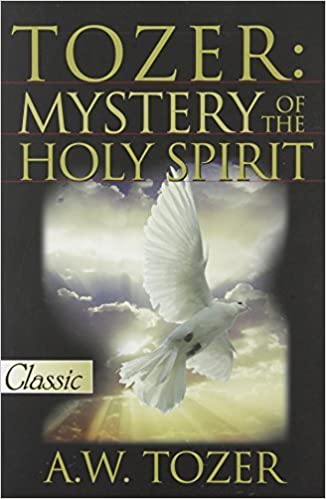
This book is a collection of transcribed sermons of A.W. Tozer. Sometimes his off-the-cuff spoken words translate into reading that appears a bit awkward. However, in my opinion this book contains some pure Christian gold.
First, I’ll caution you: I think this book may not be helpful for “young” Christians. I remember what it was like when I first believed in Jesus, and at that time, this book would have been way beyond my ability to get any good from it.
BUT, if you’ve been a believer for a while and you’re getting real tired of the ways of the world, and maybe even gone so far in worldly despair that you start to look forward to death, then you have reason to get excited, because this book has just what you need.
Some of what Tozer talks about can be a bit hard to swallow for our earthbound minds and prideful human nature. But if you want to grow closer to the Holy Spirit of Jesus, then this book remains near the top of my list of recommendations.
Instead of me trying to describe the book, I think it will give you a better idea by reading some tasty, and sometime meaty morsels.
“I believe Pentecost did not come and go, but Pentecost came and stayed.”
“When we give the Holy Spirit His place, there will be joy that is not worked up. It will be joy that springs like a fountain.”
Those were just a couple of appetizers. Now for some hearty meat:
“I ask you; are you sure you want to be possessed by the blessed Spirit of the Father and the Son? Now, do you want your personality to be taken over by someone who is like this?”
“If there is anything bigger in your life than your desire to be a Spirit-filled Christian, then you will never be a Spirit-filled Christian until that is cured.”
“It is loneliness for God; you are lonely for God and you want God so bad you are miserable. You are getting close then. You are near to the kingdom, and if you will only keep on you will meet God. God will take you in and fill you.”
Okay, you’ve been warned. Are you hungry and brave enough to crave surrender to the Holy Spirit? If so, read this book. And your life might never be the same. Now, wouldn’t that be great!?
Yesterday I posted something about how I believe that we can be the “one true Christian church.” (see it here). I shared it on Facebook and received a comment that showed me I wasn’t all that clear in spelling out my beliefs. Now I think that a lot of you who follow my blog already have a good handle on my beliefs, so you were able to see past the red flags that got in the way of letting others see my true meaning.
Anyway, here’s the comment that the person left, which I’m grateful for:
Per the article – “As He was God-as-human, you can be Jesus-as-human. You too can be fully human and fully God.” – “Don’t you know that you yourselves are God’s temple and that God’s Spirit lives in you?” (1 Corinthians 3:16) So, are we fully God or His temple … fully God means to possess and utilizes at will His total abilities and characteristics; do you /have you, ever been fully omniscient, omnipresent, omnipotent? You may be a written epistle, even erroneously considered “a god” , BUT FULLY GOD???? If that is not what was meant, it was poorly communicated. YOU WILL NEVER BE FULLY GOD …even thinking about approaching that kind of bogus mentality had satan driven/cast OUT of heaven… rethink the “Ye are gods” teaching and movements…
And here’s my reply:
I think I wasn’t clear in what I believe. For example, to be “fully God” to me means that I don’t possess anything. It means that God possesses me, completely. I have none of God’s abilities. Without God, I’m just a wretched mess.
I believe we can be fully God, as I believe Jesus has promised. But it requires that we deny “self” and absolutely surrender to God so that His Holy Spirit can enter into us and live through us, as God lived through the Son of Man. But as is the case with our inherently prideful human nature, denying “self” is really hard, and it often feels impossible. Yet as with all things, what’s impossible for me is possible for God. And I trust in God and Jesus to make my desire for complete denial of self to become a reality.
Again, I have none of God’s abilities, and I never will. But that’s doesn’t mean that God can’t exercise His abilities through me. In the words of John the Baptist, He must become greater and I must become less. I think true holiness and joy comes when the Spirit of Jesus becomes ALL within me, and I (i.e., my prideful “self”) become nothing. And that’s what I believe.
I just hope I was more clear in my response than in the original post. But my problem is, it’s all really clear in my head, and my heart. It’s just sometimes hard to type that up into accurate words. Oh well.
I’ve heard the Roman Catholic Church referred to as the one true church. And some protestant denominations may consider themselves more Christian than others. But, what makes one church more Christian than another? What is “church,” after all?
Ask an average Christian churchgoer what church is and you may get answers like: fellowship, singing together, praising and worshipping God together, praying together, evangelism, discipleship, giving, serving. One person once told me that church is a business. And I’ve seen some churches act as if their job is to erect a wall around them to protect themselves from the influences of the outside world.
But how do God and Jesus define church? What would they say is the one true church?
First, a warning. I freely accept that the answer I’ll offer may not be popular with some people. But, as it comes from the Bible, it’s the only answer I can faithfully give.
Okay, so let’s see what Jesus says. Once, having been asked when the kingdom of God would come, Jesus replied:
“The kingdom of God does not come with your careful observation, nor will people say ‘Here it is,’ or ‘There it is,’ because the kingdom of God is within you.” (Luke 17:20-21)
This may not seem like an obvious answer to my question, but it’s a clue. What else did Jesus say on the topic? Well, in his final hours before his death, while praying to his Father, Jesus said:
“I have given them the glory that you gave me, that they may be one as we are one. I in them and you in me.” (John 17:22-23) and …
“I have made you known to them, and will continue to make you known, in order that the love you have for me may be in them, and that I myself may be in them.” (v. 26)
Finally, Paul knew what the one true church was:
“Don’t you know that you yourselves are God’s temple and that God’s Spirit lives in you?” (1 Corinthians 3:16)
Jesus prayed for you to be so filled with His Spirit that you and He will be one and the same person. His Spirit can so fill you that you are Him. And Jesus blazed the trail for us, setting the example and opening the door for us so that we can follow Him and have the same relationship with Him as He had with God. As He was God-as-human, you can be Jesus-as-human. You too can be fully human and fully God.
On this Pentecost, we remember that day some 2000 years ago when the Holy Spirit entered into each member of the small group of early believers, establishing His church. Jesus’ Spirit wants to share his presence with you too, so you can be God’s temple on earth. THAT, is the One True Church.
The church is not a building, nor is it an organization of similarly minded people. The church is you. If I’ve done an effective job of conveying the reality of this truth to you, then pick up your Bible and read the New Testament with the image of Jesus within you, reading along with you. And you will clearly see how the four Gospels and all the letters that follow are absolutely filled with this picture of the one true Christian church.
Self-reliant, self-control, self-sufficient. Society, our upbringing, and maybe even our DNA, programs us to be able to take care of ourselves and not rely on others. And I’m grateful. If it were opposite, society and humanity would fade away, for there would be no one with enough self-ability for the rest of us to rely on. (Maybe we acquired these self “gifts” when our ancestors Adam and Eve chose to no longer rely on God).
Though self-abilities are a key ingredient in society and humanity, it damages deeper elements of our existence. Our self-sufficient nature is the final hindrance to us having the best of relationships with God and Jesus.
I’ve read many books on how to find and feel the most joyful of relationships we could imagine, the relationship that Jesus offered us with His Holy Spirit. I vividly remember the first time I read many of these books, balking at the declarations that we must surrender our entire lives to God and subject ourselves to His will, and none other. “Nope. That’s not for me,” is the thought that would fill my mind and devour any hope of freedom.
I suffered from “Self” Deception. Still do, sometimes.
There are two creatures that make up our personalities— non-self and Self. The part of you that is not consumed by Self, the non-self, is the true child of God. Self is the seed planted by Satan. So, I’ll call the two creatures Child and Self. You could also call them Good and Evil.
Self is the troubled one that causes all the problems of life. Self is overbearing in most people, in that it’s stronger than Child is, and it calls all the shots, leaving Child penned up in a corner. Where Child is the victim of Self, Self is the victim of Deception.
The Deception keeps us from seeing and accepting the truth. Though the truth applies to all of us—such is the nature of anything that’s an actual truth—that truth only has a chance of survival in those who believe in Jesus Christ and are willing to rely on Him, rather than Self.
And the truth is, the peace and joy we crave requires the denial of Self, a growing hunger for the complete death of Self, absolute reliance on and surrender to God and Jesus, and the filling of our Child-self with the Spirit of Jesus. He in us, we in Him. Only then can our Child be set free to truly live, and love.
Available onAmazon. Yet you can likely find it other places as well.
I’ve had this book since 2004 and I’ve now read it four times. And I’ll read it again. It’s just one of those kinds of books, kind of like the Bible.
Since Andrew Murray’s South Africa ministry covered some remote areas, and most of his congregation couldn’t come to his church each Sunday because they simply lived too far away, he often went to them in the form of his writing. He wrote several 31-chapter books, with a different chapter for each day of the month. Abide in Christ is one of those 31-day books. But perhaps as evidenced by my inability to leave this book on the shelf, this one has some intense power written into those 31 days.
Andrew Murray draws from Jesus’ illustration of the vine and the branches, where Jesus is the vine and we are the branches (John, chapter 15). As long as we stay connected to Jesus, as long as we “abide” in Him, He will feed us as the sap of the vine feeds the branches. And we will bear much fruit.
But for me, Murray takes Jesus’ illustration and adds an understanding I’d never seen before, even though I’ve long lost count of how many times I’ve read chapter 15 of John’s gospel. For example, the chapter for day 23 was a life-shaker for me, but only during the fourth read which I recently completed. During that last read, it felt like my eyes were finally opened to a profound truth that has always been in plain view in the Gospels. But I’m not going to tell you about it—if you want to know, I encourage you to get the book yourself. You won’t be sorry.
Anyway, this book will feed your relationship with Jesus and His Holy Spirit. Hopefully you won’t have to read it four times to get what I’ve gotten out of it. But no matter how easily you digest the truths in this book, you will end up feeling much closer to Jesus.
Like most of the books I recommend, this one can be a life-changer.
Note: what I’ve linked to is but one version of this book, other versions being available from other publishers. I don’t know the differences. Just make sure it’s the “31-day devotional” one.
Available onAmazon. Yet you can likely find it other places as well.
This book is a daily devotional, where some of the most insightful of Andrew Murray’s writings have been collected into 365 days of inspiration. In the words of the publisher, “For several generations, the writings of Andrew Murray have stirred the hearts, minds, and souls toward deeper devotion to God, to the Lordship of Jesus Christ, and to the powerful ministry of the Holy Spirit.”
As of the writing of this review, I actually haven’t finished reading this book. Also, I cheat and usually read more than one devotion per day. So as I write this around the end of May, I’m now on the devotion for August 29th. But I’ve read more than enough to highly recommend this book. Look, Andrew Murray’s writings have been a staple part of my reading diet for many years. Everything I read of his I put back in my stack of books to read again. This book is no different.
Like all of the books I recommended, this one will help you see and feel what true Christianity is all about. Also, it will lead you into a relationship with Jesus Christ and the Holy Spirit that you never could have imagined. And like a lot of daily devotionals, there is no better way to start or end your day than reading from this book.
Do you want to know Jesus and His Spirit more intimately? This book might be a great way to start. But beware, for like most of the books I recommend, it will challenge your prideful human nature.
By the way, Andrew Murray (1828 – 1917) was a pastor and author, living in South Africa. Many of his books were written specifically for those he ministered to, to help nurture and guide them in their Christian life.
Note that the book I got from Amazon has a cover that looks different from what’s shown on the Amazon book page, and from what I show here.
Jesus frequently called himself the son of Man. He followers were well aware of his divinity, as the Son of God. All the miracles, along with the depth of the wisdom in his words, constantly reminded them that Jesus was much more than a man. But I’ve been thinking, maybe Jesus called himself the son of Man to help remind them, and us, that he was indeed still a man. I can imagine that if I had been one of Jesus’ followers while he walked the roads of ancient Israel, it would have been easy for me to lose sight of Jesus’ humanity. I could have quickly come to see him purely as the Son of God, which is the sole way a lot of us see him these days.
Yet Jesus seemed to feel it was important to remind us of his human heritage. Why? Well, this morning another thought came to mind. As the son of Man, Jesus inherited everything we inherit, that is, human nature. The doom we all inherit is our natural human pride, which is the root of all sin. As the son of Man, Jesus shared all aspects of our human nature, even the temptation to be pulled into the pit of pride. The difference between Jesus and us is that his divinity was stronger than his humanity.
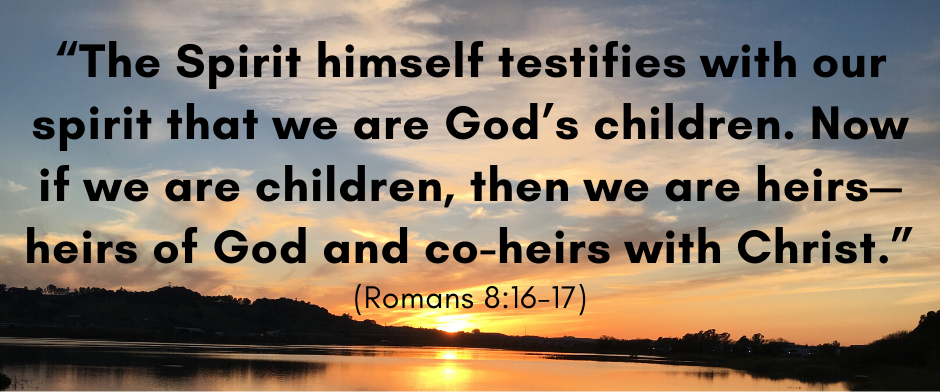
But the Bible promises that as children of God, we are also heirs, with an inheritance of our own. Where Jesus inherited our humanity, along with all the challenges that come with that, we can inherit his divinity, along with all the healing, peace, and love that come with that.
By the way, if you’d like to see more of what Jesus’ nature might actually have been like, please check out this novel. It will show Jesus from the perspective of those who felt the miracles, listened to his words of wisdom and love, and followed him along those dusty roads. On Amazon, this book is currently priced as low as Amazon will allow.
Another weekend. A lot like last weekend. Same routine, different day. This might be a good weekend to check out a different book, something new to read. And this book might be like nothing you’ve read before.
The decision that tempted Adam and Eve is the same decision we all must make. Which tree shall we eat from—the tree of Life or the tree of Knowledge? Of course, many of us make no decision at all between Life with Jesus verses Knowledge of Jesus. And maybe that’s because we don’t realize there’s a decision to make.
Those who choose the tree of Knowledge includes people like me, who love reading books about Christianity, always chasing after new insight. It can also include people who go to seminary and get a divinity degree, with their heads now crammed full of Biblical and theological facts, histories, and commentaries.
But what about those who choose Life? This choice is always available to us, even to those who first choose the tree of Knowledge. I’m so grateful we can always change our minds. In choosing Life, we’ll find what we seek in only one place, the Holy Spirit of God and Jesus. The fruit of the tree of Life is the fruit of the Spirit, for the Spirit is life.
The way of the Spirit does not rely on knowledge, but rather on love and surrender to the leading of the Spirit. True Christianity is not about knowledge, but rather about an intimate relationship with the Spirit of Jesus.
We find true life when we put down the book, quiet our minds, close our eyes and heart to the world, and look inside for Jesus who lives within us. And He will help us sweep away the clutter of life and knowledge so we can more clearly see Him.
Oh, books and sermons and such sources of knowledge are good, but only when they lead us to the Holy Spirit. Knowledge for the sake of knowledge is meaningless, a mere chasing after the wind.
I don’t mean to demean reading the Bible or any other form of Christian study. But the value won’t come while trying to understand with our own human wisdom. The real value in learning comes when we read and listen through the Spirit within us. And only then will the Spirit open our eyes and minds to the true meaning and value in the printed and spoken words. The Spirit of Truth will guide us into the truth. Let me give you an example.
I just finished reading a chapter in the book “Abide in Christ,” by Andrew Murray. I’ve read this book three times before, and never saw the truth that I saw today. And the truth I’m referring to isn’t solely in this one book, for it’s also clearly spelled out in the Gospels. Jesus himself states this truth, in words that could not be any clearer. But I’d never see that truth, it never sunk into my thick head, until today (I’ll probably write a post about this particular truth sometime soon).
Anyway, I believe I finally saw that truth because the Spirit of Jesus opened my mind to it. And it left me wondering—what other clearly defined truths have I been blind to in the Bible?
Are you looking for something more than head-knowledge of Jesus? Just look inside yourself, and let the Spirit of Jesus open your mind and show you the way. As he said: “I praise you, Father, … because you have hidden these things from the wise and learned.” (Matthew 11:25) And, “Take my yoke upon you and learn from me, for I am gentle and humble in heart.” (v. 29)
“And if the Spirit of him who raised Jesus from the dead is living in you, he who raised Christ from the dead will also give life to your mortal bodies through his Spirit, who lives in you.” (Romans 8:11)
“Love is patient, love is kind. It does not envy, it does not boast, it is not proud (love is humble). It is not rude, it is not self-seeking, it is not easily angered, it keeps no records of wrongs (love is forgiving). Love does not delight in evil but rejoices with the truth (love is truthful). It always protects, always trusts, always hopes, always perseveres. Love never fails.” (1 Corinthians 13:4-8)
Patient, kind, humble, forgiving, truthful, protective, trustful, faithful, never ending. All of these are captured in one word—Love. Now consider what John said about love: “God is love.” (1 John 4:16)
And as Jesus is God, we can then sincerely say, Jesus is patience and kindness. He is humility and forgiveness. He is truth, protection, and trust. Jesus is faith. Jesus is love, and Jesus never fails.
On some days, the parasite seems to slumber, not stirring up trouble. But other days, it squirms in his stomach, making him nervous and tense. When awake, the damn thing is always hungry, eating at him from the inside. Oh, it’s not killing him, but it’s not good for his health, that’s for sure. And people often see the impact of the parasite’s presence, though they don’t realize where the negative behavior is coming from. They just think it’s part of his personality. Besides, he doesn’t appear much different than other folk. Actually, he’s not.
But lately, he’s very aware of the parasite. Though he now knows it’s always been there, for much of his life, he didn’t recognize it. But the past several years, he’s spent a lot of time dwelling on his constant companion, studying it, learning about it, even reading books about it. After all, it’s good to know your enemies.
He’s learned how the parasite affects his life too, always in negative ways. Mostly, it affects his mood and feelings and how he reacts to other people. Today, he’s pondering how the presence of the parasite affects his ability to love. Maybe a strange thing to think about, but it was just an idea that popped into his head. And he hadn’t thought before of how the ever-hungry parasite might also have a taste for devouring love.
Speaking of love, this latest round of musings began when he started thinking about his ability to generate and express love for others. He sees and feels something of a love speed limit, like there’s only so much love he can give. If he’s able to stir up more love, the parasite is there to consume it and keep any extra from wrestling free and escaping out to others in his life.
He’s able to give love to his wife and children, and most of his family (except for the strange cousin and the wacko nephew), and a few select friends. Yet he realizes that the amount of love he gives each person varies, depending upon his relationship to them. And after all, he has only so much love to give—the parasite sees to that.
Yet even his more powerful love, which he reserves for his wife and two children, feels weakened upon reflection. Oh, there are times he feels if he loved them any more, his heart would burst. But that’s always triggered by some event, like when they do something that makes him proud, or touch his heart with a tender expression of their own love for him. But that white-hot feeling of love he infrequently feels is momentary, and soon cools back down. And he wonders why. Why does it sometimes feel like he’s holding back love from the ones he loves the most?
Days go by and he forgets about all this love stuff, slipping back to his usual, seemingly carefree life. But his thoughts on love return to haunt him, bringing a deep feeling of failure, failure to give total love to those he loves, especially his wife and children.
Then one day, early in the morning with a cup of coffee in his hand and a good book in his lap, he closes his eyes and meditates on this uneasy feeling about love, that feeling that he’s not loving as much as he could. And in a flash of recognition, he sees it, and knows it.
He sees himself. He has sometimes felt the dual forms of his personality, like the little angel on one shoulder, and the devil on his other shoulder, each trying to influence him. And what he sees, sucking up his limited supply of love, is his little devil, his Self … the parasite. Yes, the parasite has a name, and that name is Self. The selfish, prideful, self-centered, self-seeking side of him that is a fundamental part of the person he is.
The Self is always hungry for attention. And the delight that is its favorite dessert is love. For the more love it can suck up from its host, as well as those around him, the stronger grows its self-worth. And the sweetness of love provides it the most nourishment. Damn parasite.
He wrests his mind free from the parasite, looks down, and reads further in the book sitting in his lap. “Love is patient, love is kind. It does not envy, it does not boast, it is not proud. It is not rude, it is not self-seeking, it is not easily angered, it keeps no records of wrongs. Love does not delight in evil but rejoices with the truth. It always protects, always trusts, always hopes, always perseveres. Love never fails.”
Love never fails. But he doesn’t feel it, for his love fails often, and his efforts to give a greater love always fail. He flips several pages in the book, glances down and reads some more. “God is love.”
And then it hits him. God’s love never fails. It’s God’s love that always perseveres. And believing that God is infinite, he now sees that God’s love must also be infinite. So unlike his own limited love. And since God doesn’t suffer from the presence of His own self-seeking little devil always sitting on His shoulder, sucking up gulps of love for itself, there is no limit to the love God pours out upon His children.
Though he feels the familiar gratitude for God’s love, this new insight doesn’t make him feel any better. In a way, it just makes him feel more wretched, as he sees in a brighter light how pitiful his own capacity to love really is.
So he prays, asking God to show him how to love more. And in a flash, the answer comes to him, feeling like the answer was always there, like the book sitting in his lap, just waiting for him to open his eyes and look.
He quickly flips back many pages in the book, looking for the words he remembers and has long craved. And there it is, as John the Baptist speaks of his cousin Jesus by saying, “He must become greater; I must become less.”
And the answer he’s long known becomes sharp and clear in his mind. The more his Self becomes less, the more Jesus’ Spirit within him will become greater. And the more Jesus takes over, the more the love of God and Jesus will push out his Self, his devilish parasite, and fill him with love. All that love pouring into him will then be available for him to pour out to others. And maybe someday he too will be able to love his wife and children, his family and friends with the unlimited love of God, a love that will never fail.
He sees also the answer to being rid of the parasite of pride. He’d often wondered about a cure, or some kind of spiritual surgery to cut it out. Now he sees his freedom comes from letting the Spirit of Jesus in, and Jesus will then push out his parasite of pride.
“And hope does not disappoint us, because God has poured out His love into our hearts by the Holy Spirit, whom he has given us.” (Romans 5:5)
What was it like for pregnant Mary to know the Son of God lived in her womb, drawing nourishment from her body, growing stronger and bigger every day? We know a little from “Mary’s Song,” in Luke 1:46-56. Drawing from that, and a fair amount of imagination, maybe Mary’s story looked something like this.
********************
She woke from a fitful night’s sleep. It had been five months since the angel told her she would be with child, God’s child. She rose from her straw bed, her back sore and her feet swollen. Suddenly she felt a flutter somewhere just below her stomach, sending a chill running up her spine.
She’d never doubted the angel, and she’d known she was indeed with child, by the days of stomach sickness, thankfully now passed. And she so easily grew tired. But until that morning, those were the only signs. And then the baby moved within her.
A thrill of nervousness filled her stomach and chest. There was an actual child growing within her, but not wholly her child. It felt somehow foreign. As the days continued striding forward, she felt moments of fear, wonder, and bewilderment. She even wondered if the child would be partly her, as a normal child is part of its mother and father. Or was her body purely a vessel.
The weeks passed. The child was growing bigger and stronger, and oh so active. It woke her in the middle of the night, pushing a foot against a rib, or leaning on her bladder, forcing her out of bed and to the privy, yet again.
Later that day, as she sat in the shade of the house and rubbed her lower back, she was suddenly filled with profound faith, peace, and comfort, excited for every new day being so close to God, so honored by His presence. For how else should she feel, with the true Son of God living within her very body?
She’d believed she felt God’s presence the entire time she was pregnant. She’d often pondered it ever since the angel spoke to her. But for some reason, this day it struck her as much more that belief, but as a certain reality. Her soul wanted to shout out her joy to God, and her excitement and gratitude were beyond her ability to put into words. She felt so truly blessed by God, honored above other people. And that honor filled her with a sweet humility. God had chosen her, a lowly young woman. Why? What love God must have for her to give her such an honor.
As the days continued to go by, some slowly, some quickly, she would find herself suddenly feeling a moment of extreme thrill. Yet most of the time she was simply filled with limitless peace. And she felt that the peace came from the pure, unblemished holiness growing within her.
Then one day, when she knew the time of birth was getting near, she suddenly saw herself torn in how she felt. For as much as she anxiously desired to see the baby with her eyes and hold him in her arms, she dreaded the separation birth would bring. While pregnant, she had always felt as close to God as she thought anyone could possibly feel. She now feared losing that intimacy. But also, because of a premonition that had been lurking in the depths of her mind, she felt a growing dread for what would happen to the child as he grew into a man.
She hid those dark thoughts, for now was not their time. Now was the time to relish in the presence of the Son of God within her, filling her with peace, and love, and grace. She closed her eyes and smiled, looking again to the light of God within her that overpowered all other thoughts.
********************
We can share in Mary’s experience, in a way. If we believe Jesus’ promise of the gift of the Holy Spirit, we too can have the Son of God living within us, not as a fetus, but as Spirit.
I just survived another trek to the grocery store. The experience usually leaves me tense, breathing rapidly, heart pounding, chest tightening.
You see, I take the social distancing thing seriously. I take all the warnings and all the data seriously. But not everyone else does. Clearly, many of my fellow shoppers didn’t give a damn about social distancing. Or they’re just not thinking, as in the case of the person talking on their cell phone while shopping and not paying attention to anyone else around them.
So I come home after taking advantage of the early morning senior hour, barely past 9:00am, and I’m ready to pour myself a stiff whisky. But after unpacking the groceries and putting things away, I have a better idea. And it’s an idea I’d like to share, as it might help you find relief from those stress-filled moments.
Grab a hot cup of tea, or maybe a one-pound chunk of dark chocolate, and relax with a novel that will take you far away, to another time and place. And as some of you know by now, I have a particular book in mind.
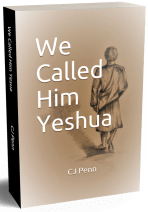
We Called Him Yeshua is a story that can take you all the way to the villages and roads of ancient Israel, where you will become another one of the healed and hopeful, following Jesus on his final journey to Jerusalem. You will see Jesus not through the lens of ancient biblical manuscripts, but through the eyes of your fellow travelers. These people felt Jesus’ love reach down to the depths of their souls. They saw his love in action, every day, in all kinds of ways. They called him Yeshua. Read this book, and maybe you will come to call him friend.
Would you like to see more of what this story is about? Click on the image below to go to the Amazon book page. Then, use the Amazon “look inside” feature and get a taste for yourself.
I was just reading about what it means to pray in Jesus’ name, in the book, Abide in Christ, by Andrew Murray. And I finally saw a deeper, clearer meaning.
To pray to God in Jesus’ name is as if Jesus Himself is asking Father God on my behalf. Yet instead of Jesus asking for me, Jesus has said I can go directly to God and use His name. It’s almost like he says, “You have my approval to ask the Father.”
I’ve known this before, but today I think Jesus opened my mind to the deeper meaning, which is: Before Jesus will give me his approval to use his name, he needs to be willing. What I need to do is first go to Jesus and ask Him to bless my request. And I completely believe that Jesus will bless all prayers that glorify Father God.
And Jesus will show me how prayers can glorify God, and how to change errant prayers so they will then glorify God. Then, I can go to the Father with Jesus’ blessing and say something like, “Father God, in Jesus’ name and with His blessing, I humbly ask you for (insert request here).”
So today, I did just that. And what a GREAT time of prayer it was! I’ve never felt so certain that a prayer will be smiled upon by God and granted in some way. And now I’m excited to see the outcome.
Give it a try. It’s great!!! And if at first it feels awkward to go to Jesus and ask for his blessing, well, maybe the two of you just need to become closer friends. And the beauty of going to him with requests like that is the more you meet him in this way, the closer you will become.
Would you like to know Jesus more intimately? Would you like to meet the man who loves you without end, who is willing to suffer for you again, and again?
I’ve studied a bit of the physiology of the physical torture Jesus endured when he was flogged and then nailed to the cross. The idea that he would be willing to go through that again is too much for me to comprehend. How does this idea touch you? If it gives you a desire to show gratitude in some way, based on everything he said in the Bible, I think the best way for us to show our gratitude is with our love for Jesus.
To truly love Jesus, it can help to truly know Jesus. We know about him by what we read in the Bible, hear in sermons, and feel in prayer. We may know a lot about his divinity. It can help to know more about his humanity. For as Jesus is fully God, he was also fully human (and maybe still is—that’s a bit of theology I’m not sure about).
Anyway, I’d like to invite you to get to know more about the person who is willing to suffer for us yet again, whose love is without end. I’d like to invite you to see how Jesus’ love manifested itself when he walked the roads of ancient Israel. Read We Called Him Yeshua, where you will see Jesus through the eyes of those who felt first-hand the endless love, and saw with their own eyes how he suffered for them. And you too may then feel as close to Jesus as they did.
Does God feel distant, and maybe intimidating? How about Jesus? When you think of Jesus, does he feel close or far away, familiar or foreign? And what about the Holy Spirit whom Jesus promised to send to us?
To get the know and feel close to the Spirit of Jesus, I think you first need to get to know and feel close to the man Jesus.
If you would like to feel closer to Jesus, or are interested in seeing more of his human side, please check out the book, “We Called Him Yeshua.”
Today (Sunday, April 26) is the last day the price will be as low as Amazon will allow. So if you’re interested, now’s a good time to get the book.
Regarding my recently published book, We Called Him Yeshua, I wanted to mention a few things.
If you know anyone who may be interested in buying it, this weekend would be a good time as it’s still priced as low as Amazon will allow. But the price will be going up Monday morning.
Based on some feedback I’ve gotten, this book might be a good and easy way to introduce Jesus to someone who currently doesn’t know Him, but may be interested. So if you have a friend you’d like to introduce Jesus to, maybe you could give them this book as a gift.
Finally, if you’ve read the book and haven’t left a review on Amazon, but if you’d like to leave a review, please give it a go. And thank you so much to those of you who have left a review. Every review, no matter how many stars, helps makes the book more visible to browsers on Amazon.
I hope you have a great weekend. I’d love to sign off with some encouraging words that could help us all cope with the new world situation, but nothing is coming to me, other than worn out and non-helpful clichés. Oh well.
What follows is an excerpt from the novel, We Called Him Yeshua. In it, you will see a brief glimpse of the power of Jesus’ forgiveness, from the perspective of a woman who, after years of judgment and scorn, needed forgiveness more than she could have imagined. We call him Jesus; they called him Yeshua.
****************
– Lydia –
When we reached the square, vomit tried to push its way up my throat. I nearly collapsed as the men flung me against the mud-brick wall next to the synagogue. I hit hard and tried to stifle a yelp of pain. The mob spread out in front of me, some bouncing stones in their hands. They were waiting for something. Who would be the first to throw? How much would it hurt? How would it feel to die? How much longer did I have to live?
A ray of sunlight shot out through a gap in the clouds as a man strolled casually across the square. At first, I thought he was going to join the stone-throwers. But he walked past, never giving them notice, and stood against the synagogue wall next to me. Then I realized—it was the prophet who had brought Zach to life.
“Teacher,” the lead Pharisee said in obvious mock respect, “This woman was caught in the act of adultery.” Right, but that was two years ago. “The law commands us to stone such women. What do you say?”
So, this was what the mob had been waiting for. They weren’t out to punish me. But the prophet just stood there, looking at the mob, his gaze roving from one to the next. Each man shuffled his feet and looked away whenever the prophets’ eyes landed on him. The prophet then knelt down and began writing something in the dirt with his finger. The sun burst out full from behind the clouds.
“The law commands us to stone this woman!” the Pharisee shouted. “Now what do you say!?”
Still, the man didn’t respond. Didn’t even seem interested.
As I stared at his finger tracing in the dust, sweat dripped down my forehead and into my eyes. I whispered, “Lord, have mercy on me, a sinner.” I really didn’t think God was listening, but … I was desperate.
Then, the prophet rose to his feet, again glanced from man to man, and declared, “If any one of you is without sin, let him be the first to throw a stone at her.” He bent back down to the ground and continued writing.
If anyone were without sin? Well, that would be the Pharisees. They obsessed over God’s law and the hundreds of manmade rules. They wouldn’t dare sin.
Then, I heard it. A dull thud. I looked up to see a man from our village, his stone lying on the ground. Several heartbeats later, another thud, followed by another. Soon, the only men holding stones were the Pharisees. As I’d feared.
But they weren’t looking at me. They were staring at the man still writing in the dirt. Their faces blazed with an intense hatred, the kind of hatred that kills. But whether he realized his own danger or not, the prophet seemed focused only on his writing.
I don’t know what those zealots were waiting for. They weren’t going to back away now. What chance did—
I jumped at the sound. Slowly, I lifted my eyes from the writing to discover the youngest looking Pharisee had dropped his stone. His eyes were on the patch of ground before his feet. Time slowed. And then, another stone fell to the ground.
After what felt like several minutes, the last stone still remained tight in the hand of the head Pharisee, the one who’d done all the talking. My eyes locked on that hand, its veins bulging, its knuckles white. And then, as if in slow motion, the fingers relaxed and opened. The stone rolled free and slowly tumbled through the air, raising a tiny cloud of dust as it hit the ground. The early morning sun glistened off the dust as it drifted back down.
The mob silently broke up, with the village hypocrites’ guild leaving first. The Pharisees hesitated. Then, they too shuffled out of the square.
When the last one rounded the corner of the synagogue and disappeared, the man at my feet lifted his head, looked up to me, and smiled. I felt that smile, so warm and full of kindness.
He glanced around the square and brushed his hands together as he stood. “Woman, where are they? Is there no one who condemns you?”
“No one.” My voice trembled.
“Then neither do I condemn you. Go now and leave your life of sin.”
I collapsed to the ground as tears poured down my dusty face. “Sir!” It came out as a hoarse whisper. “Why?”
Kneeling down, he cupped my chin in his hand and lifted until my eyes met his. “Please, call me Yeshua.”
He took my hands, lifted me to my feet, and folded his arms around me in a warm hug. I nearly collapsed again, but he held me steady. And then I realized something. He touched me! This man, more righteous than all those religious leaders, more godly than all the rest, had touched me. An adulterous woman like me and he didn’t seem afraid my sins might make him unclean.
“Sir. I mean, Yeshua,” my voice still trembling, “why do you forgive me? Why are you so kind?”
“Because of love. I live by a higher level of love, God’s love. By his love, God keeps no record of wrongs. Neither do I.”
****************
Would you like to read more? Click on the image below to go to the Amazon book page. Then look inside (with Amazon “Look inside” feature), and see what you think. And if you’d like, the book is currently priced as low as Amazon will allow, but only until this Sunday, as the price will increase starting Monday, April 27.