I’ve been working a lot lately on trusting God, with my writing (book and blog), with work, with all my relationships. And I’ve seen that like everything in our lives, with practice, trusting God becomes easier.
It’s becoming easier for me to just relax and let Him guide my steps, guide my hand as I write, guide my words as I speak. And it’s a blast! This sense of real, sincere trust and what I see as He guides me – it’s really fun. This is joy, the joy of trust.
Oh, dear Jesus, thank you so much. As your peace and joy is beyond understanding, so is my gratitude beyond my ability to express. I am yours. Now let’s go have some fun and work on the book.
Watch a group of young children at play sometime. Made-up games, with few rules. One game may morph into another game. Full of fun and giggles. Spontaneous, out of control and unpredictable.
I just started reading the book, “The Good and Beautiful Life,” by James Bryan Smith. Just a little ways into it, he introduced the idea of play and how it relates to our life with God.
I think I’ve had times of playing with God, without realizing it. Spontaneous, out of control and unpredictable. Like the mornings where He and I get together in thought, and I just relax my mind and ask Him what He wants to do. In a way, maybe I’m letting God choose the game. And it’s in these moments of giving control to God where some of my best writing has sprouted. It’s a blast!
Playing with God: what does this mean to me? Just relax, trust Him as a child would trust, and have fun. Humbly let go of the desire to control and happily follow the Leader, wherever He may lead. And I believe that when you’ve found the fun, the joy, of playing with God – then you have found the true presence of God within you.
[Look, something brought you to this blog post. If it was a mistake—sorry. But if you’d like to see something that is probably more worth your time, please check out the blurb about my soon-to-be-published novel on my new website. It’s basically about seeing a different perspective of Jesus, through the eyes of some background characters in the Bible. New website: cjpenn.com]
I just started reading “The Good and Beautiful Life,” by James Bryan Smith. Chapter One invited me to write a letter to God, describing the kind of life I want to live. Here is my letter.
Dear God,
The life I want most for myself is a life of You living through me. I desire with all my heart that when others look at me, they see You. I desire never to do or say something that you wouldn’t do or say. I desire to live with honor, integrity, compassion, humility, forgiveness, understanding, and true love toward all who come into my life. I desire to be a true image of You. Thank you dear Lord.
It takes humility to really forgive, to take your eyes off your SELF long enough to waive goodbye to the hurt. I found myself thinking about forgiveness yesterday – don’t know why. I guess I was just struck with the thought that everyone needs forgiveness of something. And it seems like there’s not enough humility to counter the hurtful acts needing forgiveness.
Then this new thought crashed into my Sunday-slumbering mind: humanity, by our sinful and prideful human nature, is all messed up. It’s just part of who we are. Therefore, by our nature, we will all hurt others, intentionally or not. And we will all create a need for forgiveness.
Then this thought hit me: for those who cannot learn to forgive others, they are doomed to a life of unforgiving misery, for there will ALWAYS be hurt needing forgiveness.
Maybe look at it this way: visualize an old-fashioned scale with the cross-arm and a bowl hanging off each end. In one bowl are all the hurtful acts that need forgiveness. In the other bowl is our capacity to forgive. The hurtful bowl is overflowing – again, it’s just who we are as humans. The forgiveness bowl is often nearly empty. Our life is out of balance, unless we are able to increase our capacity to forgive.
God can give us that capacity, if we desire. God can show us the futility of holding a grudge, since humanity will always create hurt. God can bring balance to our life.
I watched the movie, “Heaven is for Real” last night. I had read the book, but that was a few years ago. What hit me in the face from the movie was the struggle the pastor dad went through… his struggle when faced with compelling evidence for the existence of heaven. Such evidence can really have you questioning your faith, for you would then need to decide whether to accept or reject the evidence – which is to accept or reject everything you believe about God.
After the movie, I started questioning my own beliefs. If faced with similar evidence, how would I react? Is my faith strong enough to excitedly accept such evidence? I think so, but I don’t feel safe in assuming so. I guess I’m just not certain. It’s weird. I feel the presence of the Holy Spirit in my life, even as I write these words. But that’s based on faith, which is believing in things despite the lack of evidence. What happens to our faith when faced with undisputable evidence? The thought is scary to me.
Yet I see evidence of God all the time, as long as I have my eyes and mind open. I’m confused. Sorry for the weird post – it just felt right to put it up on the site. I hope you all have a great day.
As usual, Tom sat quietly during the first part of our small group bible study, just listening and thinking. Eventually, Tom would start talking, and what he had to say was always well thought-out, inspiring, and intriguing. I looked forward to the moment when Tom decided to join the conversation. But on this night I found myself not ready for what he had to say. “I just know I’m not going to heaven. I’ve done too many bad things in my life. God can’t love me. I’m just not good enough.”
Tom is a victim of a scam of guilt promoted by some churches. Tom and others like him have difficulty in believing that God can in fact love them; they just don’t feel good enough. Does God love only good people?
First, the “goodness” Tom believes he lacks does not come from past behavior, but from faith: “This righteousness (goodness) from God comes through faith in Jesus Christ to all who believe. There is no difference, for all have sinned and fall short of the glory of God.” (Romans 3:22-23) It’s not the amount of goodness or badness that matters – it’s what you believe.
God doesn’t care about our past; He cares about now. No matter how dark your past may be, where are you now? Do you feel distressed about past sins? Do you wish you could erase the sins of yesterday, and resist the sins of today? I know Tom does; he said so. To such a show of repentance Jesus would say, “I tell you that in the same way there will be more rejoicing in heaven over one sinner who repents than over ninety-nine righteous persons who do not need to repent.” (Luke 15:7)
Many Christians believe that making the gospel relevant for our times will attract people to the church. Trying to “meet people where they live” is just what Jesus did, so this should be a good approach. Yet, judging by the dwindling numbers of those attending church, there must be something wrong with the drive for relevance.
The flaw of the relevance approach is when they change the message to meet the needs of the day. This takes the focus off the truth of Jesus. His message is eternal, in that it always meets the needs of the day, no matter what day it is. We always need love, always need faith, and always need hope. This is what Jesus has to offer, and it’s always relevant.
What people need is not a customized message for the day, which will loose power as conditions change. It’s not relevance that’s needed, but truth.
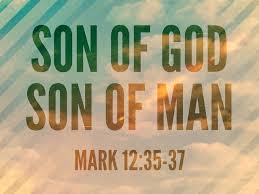
Jesus frequently called himself the “Son of man.” I was reminded of this while listening to a Third Day song on the way to work yesterday. And I began to wonder why He chose that title above others.
Why did Jesus seem to feel it was important to stress His humanity? Yes, Jesus is fully God, but He was also fully human. And it seems like He almost took pride in His humanity. Being one of us was important to Jesus. But why? I’ve been thinking about this since yesterday, all the time with the sense that the answer to my question was right at the edge of my mind, just barely out of reach of my consciousness.
Well, this morning I’ve been able to quiet my mind and pray, asking Jesus to give me the answer. Though I think the complete answer is still not clear to me, I do believe I see Jesus’ main reason for stressing His humanity. It’s love. Jesus loves us humans so much that He also loved being one of us.
That’s another thing that definitely sets Jesus apart from me – though He seemed to cherish His humanity, I am often pained by my humanity.
But what do you think about Jesus calling Himself “Son of man?”
They made me feel like they were constantly judging my behavior and actions, always looking for some weakness to shine their spotlight on. They projected an air of superiority. They rarely hung out with anyone who was not a member of their exclusive organization. Yet they always seemed to be pressuring me to leave my life behind and join their perfect club.
But they themselves weren’t perfect. In many ways, they weren’t much different than me. This hypocrisy and the judgment and the arrogance – these are the things that turned me away. Join their club? Forget it!
For much of my life, this was my response to Christians. But eventually I started learning the truth about Christianity, and how Jesus led by His example. Jesus hung out with sinners, like me. Jesus didn’t come to judge us. Jesus loved unconditionally. And He didn’t form some exclusive club. The more I learned about the truth of Jesus, the more I realized that the ugliness I had seen in some Christians came from human nature, not Jesus. My challenge is to keep my own ugly human nature from gaining the spotlight.
The most effective lessons are the ones you figure out yourself.
Almost daily, I earnestly ask God to show me how to do something, like solving a writing problem in the book I’m working on. Though I feel His presence with me, and at times, He does seem to give me the answer, He doesn’t solve all my writing challenges.
It just occurred to me that maybe God has a good reason for not showing me the solution to all my problems. Like any good parent or teacher, maybe God is telling me that for some problems, I need to figure out the solution myself.
“As a result the Church, to whom the transmission and interpretation of Revelation is entrusted, does not derive her certainty about all revealed truths from the holy Scriptures alone. Both Scripture and Tradition must be accepted and honoured with equal sentiments of devotion and reverence.” (Catechism 82 of the Roman Catholic Church, emphasis added) The Catholic Church considers God’s word, as recorded in the Bible, and Catholic tradition, as equally valid and important.
Jesus might say in response, “You have let go of the commands of God and are holding on to the traditions of men.” (Mark 7:8)
Moses might say, “Do not add to what I command you and do not subtract from it, but keep the commands of the LORD your God that I give you.” (Deuteronomy 4:2)
And the apostle Paul might add, “See to it that no one takes you captive through hollow and deceptive philosophy, which depends on human tradition and the basic principles of this world rather than on Christ.” (Colossians 2:8)
Catholic tradition verses the word of God – I’ll choose God.
It’s difficult and often dangerous out in the “real” world. As I raised my children, I protected them, fed them, taught them, cared for them, and loved them. I did my best to create a safe, joyful and loving environment at home. Yet they left.
Well of course they left; that’s the way of our society. Raise your children and then send them off on their own, to fend for themselves and put what you taught them into practice, hopefully.
It’s part of our nature to want to go out on our own, and live independent of our parents. We want to make our own decisions and direct our own life, without having to report to someone else. And along with this comes the responsibility of dealing with our own problems, on our own.
Of course for many of us, mom and dad are no farther away that the other end of the telephone, and they are often willing and able to help us deal with our problems. We may have left them when we moved out of their house, but they never really left us. Loving parents make themselves always available to help and guide their adult children.
Where am I going with all this? Well, I think this little scenario illustrates our history and relationship with God.
Humanity, in the persons of Adam and Eve, were lovingly raised by God, who offered them a home with Him, forever. He would protect them, feed them, teach them, care for them and love them. But the independent nature kicked in. Adam and Eve wanted to leave home and go out on their own, make their own decisions and direct their own lives.
I know some self-proclaimed atheists who make a case that all of the world’s problems are evidence that there is no God, for how could a God possibly allow so much evil. The truth is, God does not allow evil, in His home. But humanity struck out on their own, into the cold, cruel, evil world. We left God to go out on our own, spurred on by our prideful ego, which told us we were smart enough to live independent from God.
Yet we are not alone in this cold, cruel world. God is always just on the other end of the phone, lovingly willing to help us deal with our problems. All we need do is call, and listen.
The Catholic Church is the one and only “true” church, or so some believe. According to a July 10, 2007 article I stumbled across (see it here), “Pope Benedict XVI has reasserted the universal primacy of the Roman Catholic Church, approving a document released Tuesday that says Orthodox churches were defective and that other Christian denominations were not true churches.”
The Vatican document said. “The other communities cannot be called ‘churches’ in the proper sense because they do not have apostolic succession — the ability to trace their bishops back to Christ’s original apostles.” Specifically, if a church cannot trace the succession of its leadership back to the apostle Peter, then it cannot be called a true church of Jesus Christ. Since the Catholics claim Peter as their first Pope, then that makes the Catholic Church the one and only “true” church.
You see, when Jesus stated that Peter was the rock on which He would build His church (Matthew 16:18), the Catholic Church took that to mean that Peter was the starting point, the true cornerstone of the foundation of Jesus’ church. Was Jesus’ intention to have Peter as the one foundation from which He would build His united church? What else does the bible say?
At one time, Jesus sent out His 12 apostles to, “preach the kingdom of God and to heal the sick.” (Luke 9:1-9) Another time, He sent out 72 others to, “heal the sick and tell them the kingdom of God is near you.” (Luke 10:1-20) Does this sound like the act of someone who would place the responsibility for His church on the shoulders of just one man? It appears to me like Jesus intended to spread the responsibility around.
There was another time when the 12 apostles got rather ticked off when they discovered there was someone outside their inner circle who was doing their job. So they went to Jesus and blew the whistle on this guy… “‘Teacher,’ said John, ‘we saw a man driving out demons in your name and we told him to stop, because he was not one of us.’ ‘Do not stop him,’ Jesus said. ‘No one who does a miracle in my name can in the next moment say anything bad about me, for whoever is not against us is for us.’” (Mark 9:38-40) Does this sound as if Jesus is trying to establish some kind of exclusive club? It sounds to me like Jesus doesn’t care who is doing the work, as long as they are doing it “in His name.”
And what about Paul, who was not one of the original apostles? The Catholic Church appears to ignore him. So the churches he started were “defective”, I suppose. I’m sure that would come as a surprise to Paul, especially since Jesus himself gave Paul the assignment. As evidenced by the calling of Paul, Jesus was not exclusive. Why would He be? Such an approach would limit the growth of “His” church. Why send the church off in one direction, with Peter as the lead runner, when you can start off in multiple directions?
***************************************
Yet, the Catholic Church originally had worthy intentions. For a time, the Catholic Church was indeed the one true church, assuring and enabling the unity that Jesus prayed for (John 17:20-23). Their motives were noble. Jesus wanted unity, and the Catholic Church provided a way. Then, in the early 1500’s, the reformation happened and the church split into pieces; no more unity.
However, maybe having all believers belonging to the same organization is not what Jesus had in mind when He prayed for unity. Maybe he meant united in beliefs, rather than united in affiliation. Maybe it wasn’t that He wanted us all to belong to the same religious establishment, with the same human leader, but that we all look to Him and Him alone as our leader.
Jesus wasn’t praying for all believers to be united by man-made things, such as religious bureaucracies, ceremonies, traditions, and “holy” relics. Jesus was talking about being united by spiritual things, such as love for God and faith in the saving power and love of His Son Jesus Christ. Jesus asked His Father God, “…that they may be one as we are one.” (John 17:22). The unity that Jesus prayed for is modeled by His relationship with God.
Were God & Jesus unified by a common membership in some kind of organization? No, their unity was much higher than some human standard. The Catholic Church has set a human standard for unity; membership in their organization. But Jesus’ standard is a heavenly standard – a shared communion with the Holy Spirit of God. We are to be united as Jesus and God are united. How can a man-made religious establishment bring such a thing about?
I do not believe that Jesus intended for a man-made institution to bring about such spiritual unity, for I think that would be impossible. Jesus sent the Holy Spirit, His presence in each of our lives, to manifest the spiritual unity of love and faith. By our mutual connection to the Holy Spirit, we are all connected to each other. We may all be one by our common bond to the Holy Spirit. We are all branches, and we are unified by our common bond to the vine, which is Jesus Christ, by the Holy Spirit (John 15:1-17).
By the way, Jesus never even mentioned a human-made and run organization as the foundation for our unity. In fact, setting the Catholic Church as the standard for unity is a distraction from our true foundation, our true cornerstone – Jesus Christ.
And another thing: Jesus was the origin of His church, not Peter. Jesus is the vine, not Peter. Jesus is the cornerstone, not Peter. Jesus is the one true church, not the Catholics.
When I was young, inexperienced and foolish, I had a very cloudy concept of what love was. In my search for the meaning of love, I didn’t realize I had to first experience it in order to understand it.
My concept of love gradually clarified and grew as I worked my way through a succession of girl friends, until I finally met the young woman who would become my wife. My feelings for her were like none I had ever experienced before. The emotions were intense. I was totally distracted from other things going on around me.
Love felt great. I became totally immersed in the emotions. I smiled almost all the time. Friends at work would tease me when they spotted me smiling while doing tiresome tasks. “He’s thinking about her again,” they would groan. But is this all that love is meant to be, some euphoric roller coaster ride? What is true love? What is the truth about love?
Now that I’m older and full of wisdom (that’s a joke – I’m still foolish), with help from God I believe I finally know the truth about love. I no longer look upon love as a goal, but rather as a journey. And I see two main stages of this journey.
The love of my youth was the first stage of the journey. As much as I am reluctant to admit it, the love of my youth was selfish love. Even the love for my wife was initially selfish love. Yes, I was very considerate and did any kind thing I could possibly think of. I so wanted to make her happy. But in digging down deep inside my self, I now realize that my foundational motivation was all about me. Making my wife happy makes me feel good. My love for her was actually rather self-centered.
Yet on the journey of love I believe it’s a very short step from this selfish stage, to the next; the self-less stage. True love, love as God would have it, is other-centered love. How might a relationship look with this kind of true love?
Image a relationship where the motivation behind each person’s actions has to do exclusively with the welfare of the other person. The husbands’ only focus is on the wellbeing of his wife. And her only purpose is looking after his wellbeing. In this way, they take care of each other’s needs. I don’t need to be concerned about my self; my wife is doing that for me. Can you imaging any better relationship? This kind of love feeds on itself, gradually and continually growing, for each person is constantly giving, rather than taking.
Paul saw this and defined it quite clearly in his first letter to the Corinthians:
“Love is patient, love is kind. It does not envy, it does not boast, it is not proud. It is not rude, it is not self-seeking, it is not easily angered, it keeps no record of wrongs. Love does not delight in evil but rejoices with the truth. It always protects, always trusts, always hopes, always perseveres. Love never fails.” (1 Corinthians 13:4-8 NIV)
This is other-centered love. This is a love rooted in humility. This is true love.
Looking at the last line in the verse above, the divorce rate would have us believe that love indeed fails. Yes, selfish love fails. Why do people get divorced? Because, “my needs are no longer being met by my spouse,” as someone once told me. Selfish love breads divorce.
But true love, the love that is focused on the other, that love that gives rather than takes; this never fails. God’s love never fails.
“Shrinking mainline Protestant denominations are turning to marketing to help stem decades of membership losses and stay afloat.” So begins an Associated Press article I recently read in my local newspaper. It seems churches, such as the United Methodist Church, believe large amounts of advertising dollars will help fill the pews again. The Methodists are spending $20 million on their ad campaign.
I can’t help but wonder, what would Jesus do if he were in charge of filling the pews? Would he throw money at the problem of dwindling attendance, or something else?
Jesus and his apostles were faced with a similar challenge around 2000 years ago; how to increase attendance. And yet in a single day, the church in Jerusalem added 3000 new members (Acts 2:41). Christianity spread throughout the Mediterranean in a phenomenally rapid manner, and without the help of television, the internet, or pesky telemarketers. How did they do it? What was their “marketing” secret?
The answers to these questions illustrate the differences between them and today’s mainline churches. The first church leaders devoted themselves to the truth. They were passionate about spreading the truth of the gospel. Their message was not always popular, and many lost their lives because of it, but that didn’t stop them from sticking to the truth.
Today’s mainline churches take a different approach. Many of them preach whatever they think would be a popular message, the politically correct message, with little regard for the truth. They have lost touch with Jesus. That is why they continue to shrink; they are no longer attached to the true vine. When a branch is cut from the vine, it shrivels up and dies. That is what is happening to many mainline churches today, and no amount of advertising will help. What they need to do is become re-attached to Jesus.
“I am the vine; you are the branches. If you remain in me and I in you, you will bear much fruit; apart from me you can do nothing. If you do not remain in me, you are like a branch that is thrown away and withers; such branches are picked up, thrown into the fire and burned.” (John 15:5-6)
I dare say that the $20 million from the Methodist Church would be better spent feeding the poor, rather than feeding Madison Avenue ad agencies.
Some churches celebrate communion, the Lord’s Supper, every Sunday. Yet, most churches I’m familiar with celebrate only once a month. Was this what Jesus had in mind? What is the truth of His intention for what we call the “Lord’s Supper?”
I was reading about the Lord’s Supper in 1 Corinthians chapter 11 this morning. There, and in the account of the supper in Luke, Jesus says, “Do this in remembrance of me.” In Paul’s account, Jesus says, “…do this, whenever you drink it, in remembrance of me.” (1 Corinthians 11:25)
Jesus wants us to remember him. He wants us to remember his body that was broken on our behalf. He wants us to remember his blood that was spilled as a penalty for the sins we have committed. But does he want us to remember only once a month? And does he want us to remember only when we go to church? And does he want us to remember only with the help of a duly ordained minister?
I choose to believe something other than what is commonly practiced in modern Christian churches. I choose to believe that Jesus wants us to remember him at every meal. That first “Lord’s Supper” was Jesus’ way of establishing a memory trigger for us. Jesus knew we would need help remembering what he went through for us. For me anyway, it’s easy to remember to pray and ask for help. But I don’t often focus my thoughts on Jesus’ sacrifice, and in doing so, offer prayers of thanks along with my prayers for help.
From now on, I choose to treat every meal as a “Lord’s Supper.” I choose to respond to the trigger I believe Jesus intended, and remember what Jesus did for you and me, at every meal. For the more often I remember, the more I will be grateful. And the more I am grateful, the stronger will be my love for Jesus. And the stronger my love, the better servant will I become.
Please share your thoughts on the Lord’s Supper. Am I way off base here? I want to learn the truth. Thank you.
I once read a blog post that claimed that God created evil, and therefore God is evil. One thing that was interesting about this post is that it was written by an atheist who also stated, “I do not claim to know God because God is a lie, an invention of men.” I often find it interesting how atheist bloggers spend so much time writing about something they don’t believe in.
There are several things I want to say about this concept of God creating evil. First of all, the atheist blogger made several references to the bible in stating his case. But in the end, he judged God based on taking very small bits and pieces of God’s history. If you want to accurately and fairly judge someone, you need to look at their whole story. But only fools and atheists endeavor to judge God. For who are we to judge the one who created us?
And another thought on this idea of judging God… to judge someone, you also need to know something about their motives. In a murder trial, the judge wants to know if the crime was pre-meditated or not. Who of us could possibly know God’s motives? And did you notice, the atheist blogger stated he does not know God, but he apparently knows God enough to judge Him as evil.
Second, I don’t believe that God created evil, but I do believe that He allowed evil to be created, and I believe that all evil originated with Satan, as recorded in the creation story in Genesis.
To better understand God’s relationship with evil, consider a human analogy: A parent has something to do in the creation of their child. Let’s say that despite all the parents’ efforts to lovingly raise their child, the child becomes a chainsaw murderer. In our society, will the parent be tried and found guilty of murder? Is the parent in any way blamed for the child’s crimes? Usually not. Yet the atheist blogger wants to blame God for the evil acts of His children. How convenient.
But WHY did God allow evil to be created and proliferate. The bible seems to indicate that it’s because God allows freedom of choice. Satan chose evil and enticed the human race to choose to follow him. Now the atheist blogger stated that he didn’t believe in free will. Again, how convenient (if I have no free will, I’m obviously not responsible for my actions).
And finally, why is it that some people choose to blame God for evil? Again, a common human characteristic is that we don’t want to take responsibility for our own actions. Like the person who sued McDonalds when she spilled a cup of hot coffee in her lap. Some people want to blame God for all the evil in the world, simple because they don’t want humanity to take responsibility for it. And they solidify their case by claiming there is no free will.
Yet again, how convenient… evil is from God, humans have no free will, so when someone does something evil, it’s not their fault, it’s God’s. What a cop out. What childish denial.
Not only does the truth set you free, but it sometimes might hurt.
My sister once told me that she couldn’t believe what was written in the bible because Genesis talks about people living hundreds of years, and she just didn’t think that was possible. All it took was one thing she couldn’t understand for her to discount the entire bible.
I suspect we’ve all come across people like this, maybe even ourselves at times; there’s something in the bible we don’t understand, and since we feel we should be able to understand, we choose not to believe. After all, why should I believe in something (like God), I cannot possibly understand?
I was reminded of this tendency last night, as I was channel surfing on the TV. I stumbled upon a movie where the particular scene had Jewish concentration camp prisoners putting God on trial*. Their verdict was that God was guilty of putting them in the concentration camp (since I didn’t see the whole thing, I may be wrong). They came to that verdict by analyzing God’s actions as recorded in the Old Testament. There was so much about God’s actions that they simply did not understand, so they condemned God because of that lack of understanding.
* (it was a Masterpiece Theater show appropriately titled, “God on Trial”)
What might Jesus have to say about our apparent need to understand all His ways?
“I tell you the truth, unless you change and become like little children, you will never enter the kingdom of heaven.” (Matthew 18:3)
Jesus is telling us that we need to have the faith of a child. Look at it from this perspective: in no way can a child understand all the ways of their parents. Yet, the child still believes in their parents, and loves them unconditionally. So it should be with us and God. True faith is accepting the fact that we cannot possibly understand why God allows certain things to happen. We just accept and believe anyway.
Also, why is it that so many of us have this need to understand all? Simple… ego. Our ego is hungry and wants to understand. And if our ego is not satisfied, it may cause us to act like a child who throws its toy because they are not happy with the answer.
So I guess we all have a choice. We can be a spoiled brat type of child, or a child whose love is not tied to conditions of needing to understand all.
Something to think about on Martin Luther King’s birthday.
Do you find yourself out of work this holiday season? Are you in despair and feeling like you don’t know where to turn for help? Maybe the idea of seeking help from God has crossed your mind, but you’ve ruled it out for some reason. Maybe you feel like your past is too dark for God to be willing to help you. Maybe you feel like you’re just not good enough. Or maybe you feel like you just don’t know God well enough for Him to be willing to help you. Do you feel like you need to be “special” before God will answer your prayers?
I may have news for you: God is more gracious and loving than that. Today I wish to give you a Christmas card of sorts. Today I give you God’s words, dedicated to you.
Please read these words as your prayer to God…
“Remember not the sins of my youth and my rebellious ways; according to your love remember me, for you are good, O Lord.” (Psalm 25:7)
“Turn to me and be gracious to me, for I am lonely and afflicted. The troubles of my heart have multiplied; free me from my anguish. Look upon my affliction and my distress and take away all my sins.” (Psalm 25:16-18)
“Good and upright is the Lord; therefore he instructs sinners in his ways. He guides the humble in what is right and teaches them his way.” (Psalm 25:8-9)
“Do not let me be put to shame, nor let my enemies triumph over me. No one whose hope is in you will ever be put to shame,” (Psalm 25:2-3)
And please read these words as Jesus Christ responding directly to you…
“It is not the healthy who need a doctor, but the sick. But go and learn what this means: ‘I desire mercy, not sacrifice.’ For I have not come to call the righteous, but sinners.” (Matthew 9:12)
“Come to me, all you who are weary and burdened, and I will give you rest.” (Matthew 11:28)
“Do not let your hearts be troubled. Trust in God; trust also in me.” (John 14:1)
“For God so loved the world that he gave his one and only Son, that whoever believes in him shall not perish but have eternal life.” (John 3:16)
“For I did not come to judge the world, but to save it.” (John 12:47)
“Peace I leave with you; my peace I give you. I do not give to you as the world gives. Do not let your hearts be troubled and do not be afraid.” (John 14:27)
“My command is this: Love each other as I have loved you.” (John 15:12)
“Go now and leave your life of sin.” (John 8:11)
My Christmas wish for everyone who reads this post is this: may you feel God’s presence and feel His love, more than ever before. And may you feel freedom from the things that cause you to worry; may you feel the un-wavering peace that can only come from Jesus Christ.
I believe in God and His Son, Jesus Christ. But what if I’m wrong? What if I come to the end of my life and discover it was all a lie? What if the end is truly the end; no benevolent Father in heaven, no heaven, no after-life? What a drag that would be. All this effort to believe, worship and follow – all for nothing.
But would it really be for nothing? This morning I started wondering how I might feel if I discovered it were indeed all a lie. Since I was agnostic up to my late 30’s and an atheist during part of those earlier years, I had a baseline for evaluating how my faith has affected my life. What did that faith do to me? How did that faith change me; the faith that I was now considering as possibly based on a lie?
Here are some of the changes that faith has made in my life:
I don’t swear like I used to.
I don’t lie like I used to.
I’m not as arrogant as I used to be. I’m much more humble.
I’m willing to acknowledge when I’m wrong, instead of trying to blame someone or something else (I used to do this a lot).
Faith has taught me to be much more patient than I used to be.
I don’t worry about things like I used to. I just trust that God will make the right things happen.
I used to run away from relationships that didn’t serve my self-interests. But with faith, I’ve been more willing to accept circumstances that are not always pleasant.
Faith has given me the strength to resist the temptation to cheat on my spouse, and I’ve been tempted a lot.
I used to be afraid of death. But now, the only thing that concerns me about death is the welfare of those I will leave behind.
I don’t agonize over people who have wronged me. Instead I’m now able to forgive them and very effectively let go of the pain. My relationship with God has taught me to replace hate with forgiveness, sorrow and sympathy. And now, memories of past wrongs bring peace, not pain.
I could go on, but it all boils down to the following: my faith in God and Jesus Christ has taught me about humility, love, hope, and how to more easily relate to and accept others.
In looking at all this I realize that I like what my faith in God has done for me. So if I discover tomorrow that my faith is based on a lie, I will be crushed and greatly disappointed, but I will definitely not feel that I wasted my life on something false. No matter what, I’m happy with what faith has done to me.
************************************************
But dear Atheist, what if I’m right? What if you come to the end of your life and discover it’s not really the end? What if you discover all this propaganda about heaven and hell, about salvation by faith in Jesus Christ, about God; what if it’s all true?
C.S. Lewis (Chronicles of Narnia fame), is quoted as saying, “Christianity is a statement which, if false, is of NO importance, and, if true, of infinite importance. The one thing it cannot be is moderately important.”
I don’t know about you, but I would rather be a Christian and be wrong, than an Atheist and be wrong. The potential outcome isn’t nearly as devastating.





 CJ Penn's Online Writing Hangout