Many people who end up leaving church started out looking for something, something they perhaps couldn’t find in their traditional church experience. So, they left. Sensing that the Christianity I’d been experiencing was influenced more by man than God, and desiring true Christianity rather than some manmade version, many years ago I left church. Without having to look beyond the Bible, I then stepped off on a journey in search of answers, understanding, and a relationship with God that I couldn’t find while attending church.
It’s been about 18 years since I began my journey. Along the way I wrote a book, “Beneath the Graffiti: A De-churched Christian’s Search for Christianity.” My book is a record of what I found when I peered beneath the accumulated graffiti of the past 2000 years, graffiti painted by church history and human nature—graffiti in the form of manmade rules, doctrines, beliefs, and traditions.
While writing this book, I found the answers and understanding I’d been looking for, I found healing and recovery from my de-churching experience, and I found a relationship with God and Jesus that’s far beyond anything I was looking for. I hope this book will similarly help those who read it.
If you’re curious about the book, please check it out on Amazon. The “Read sample” selection for the Kindle version is generous. For some weird reason, the paperback “Read sample” selection is small—Amazon quirk, I guess.
https://www.amazon.com/dp/B0DK7VD71B


 First century aspiring Christians didn’t have a written word to rely on—they didn’t have a New Testament—which may have been to their advantage. They didn’t need the written word, for as promised, Jesus sent the Holy Spirit to guide them. The paradox today is that the written word can sometimes be a distraction, getting in the way of someone becoming truly Christian. For as Jesus warned:
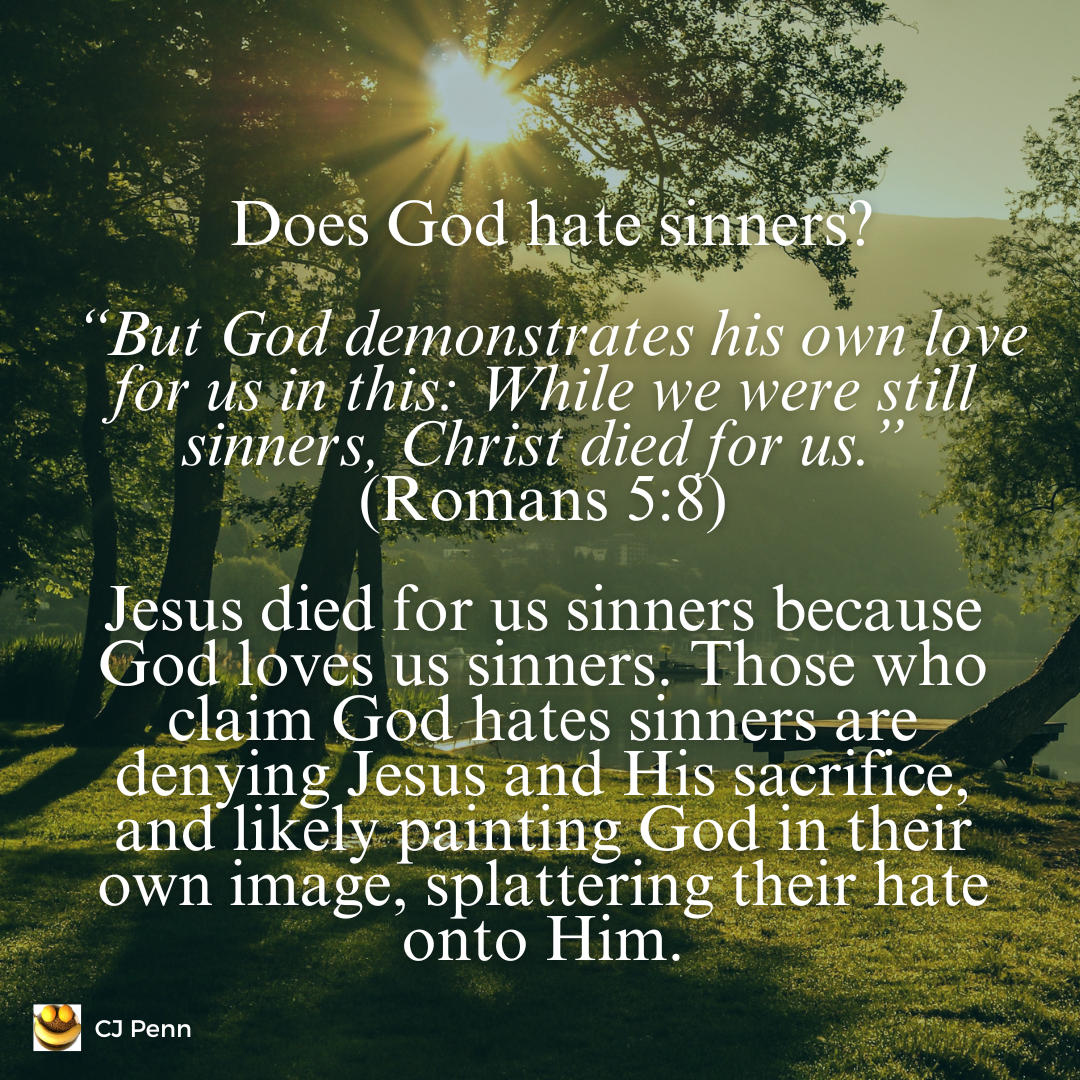 The Bible does talk about God hating sinners, such as in Proverbs 6:16-19 and Psalm 5:4-6. Some so-called Christians take these verses as license for them to shout out that God hates a particular person or group of people. Yet there are two thoughts regarding this that I’d like to place before you.
 But, where manmade Christianity inflicts wounds, true Christianity, Jesus’ Christianity, heals wounds. So if I were to try and comfort the person who wrote that post, I’d encourage them to leave their painful experience in the past, turn to God and Jesus and their words in the Bible, and pray.
 It’s not my place to convince anyone of the truth of Christianity. Christians are called to be neither an arguing attorney nor judge. All I’m called to do is be a witness, nothing more, nothing less. As Jesus said:
 When we look on the surface of modern Christianity, we don’t always see what Jesus had in mind. Rather, we often see a manmade version, a form that at least partially paints Christianity in man’s image rather than God’s image, thus defacing Jesus’ truth.
 It begins or ends with sleep. I mean, my daily connection with God. Sleep has become a weird experience for me. There’s no control of my thoughts, almost never a thought of God. Though my body’s asleep, my mind seems to never stop. One strange dream after another. It feels like a waste of time. Since my mind’s going to stay active anyway, why couldn’t it instead be with God and Jesus in heaven, resting in their presence, getting ready for the next day?
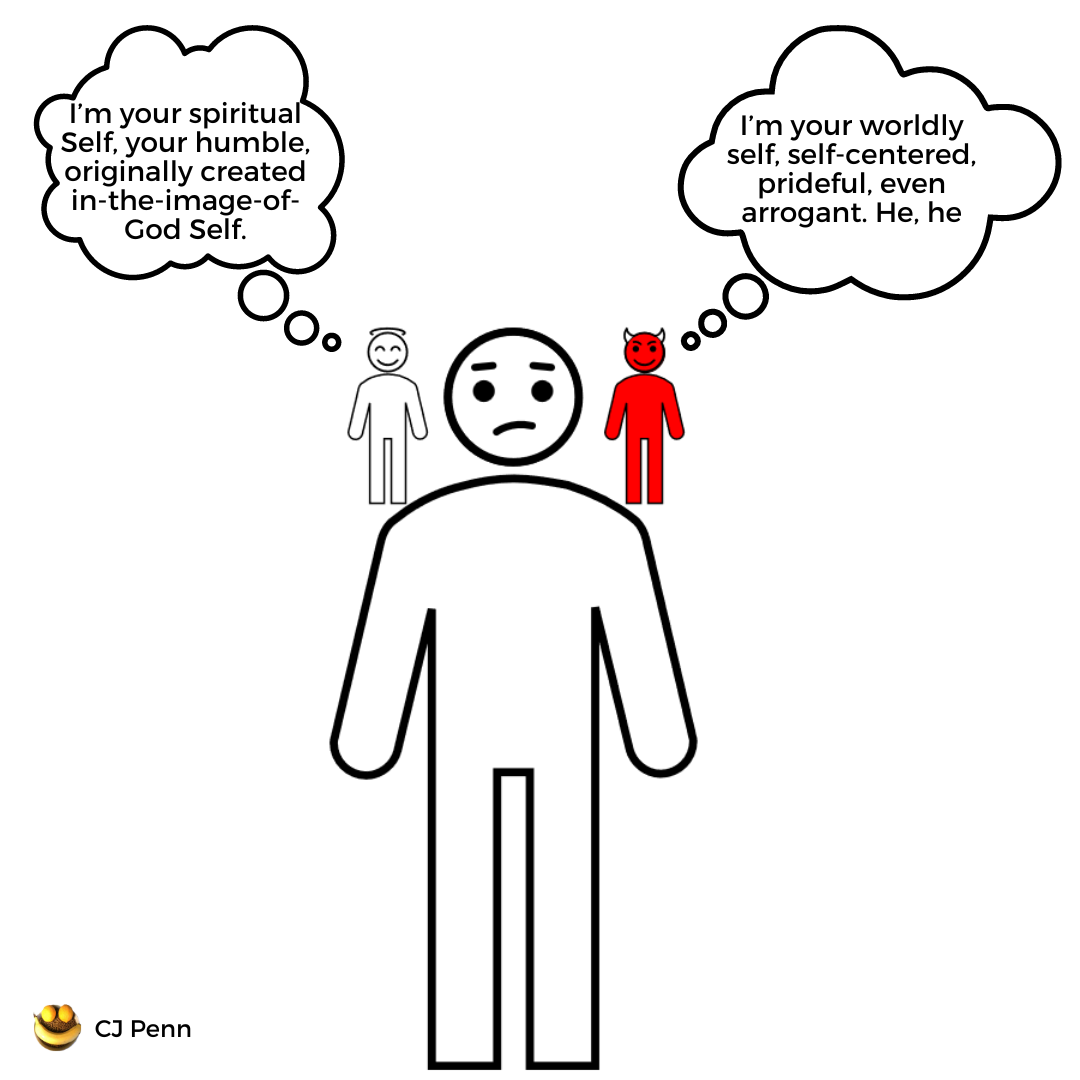 When Jesus said, “Whoever wants to be my disciple must deny themselves and take up their cross daily and follow me” (Luke 9:23), He was talking about denying the worldly and self-centered side of what makes up our personality.
 Entering the campus of Trinity College in Dublin, Ireland, as I followed the herd of other tourists through Library Square, I looked up to see a large sign with this quote from Jonathan Swift.

 CJ Penn's Online Writing Hangout